VROM™ Resonant Mixers

Industrial Mixers for Lab, Pilot, and Production Applications

VROM™ mixers are the next-generation alternative to legacy resonant mixing systems, engineered for low-maintenance and reliable operation with intuitive browser-based controls and scalable configurations for lab, pilot, and production use. VROM systems are bladeless industrial mixers for powders, liquids, pastes, and slurries, with ST models for general-purpose applications and XP models for energetic or hazardous material mixing and processing.

Explore Montana Mixers’ growing VROM mixer product line below. Contact us if you have questions or need help identifying the right resonant mixing system for your application.

Features of Every VROM Mixer

  • Cutting-edge system engineering for efficient operation,
    minimal imparted vibrations, and low maintenance
  • Space-efficient, portable designs
  • MixOS: Intuitive browser-based control from any connected device
  • MixIQ: Advanced sensing technology to optimize mix parameters
  • Pre-configured for use with vacuum and heater/chiller systems
  • Industrial all-metal chassis and exterior panels
  • Unrivaled customer support

TECHNICAL NOTE: VROM Payload CAPACITY

Unlike fixed-volume mixers, VROM capacity depends on how your materials behave during mixing. Dense, free-flowing materials may enable heavier payloads, while light, cohesive, or sensitive materials may require smaller batches, for example. 

 Learn more here. 

VROM ST Mixers

Interlocked mix chamber hood for quiet, safe operation (optional on 3000 up)

Durable finishes simplify cleanup

Heavy duty, locking and leveling industrial casters

Machine status LED light bar

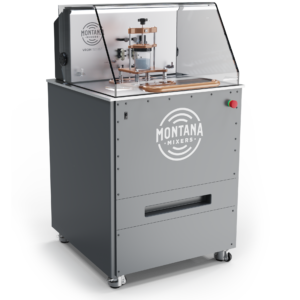
ST mixer models are designed for general purpose use with most materials from lab to production scale. 

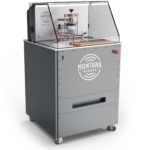
VROM 750ST 7-26 Hero sqr
VROM 750ST

Laboratory-scale benchtop mixer

Table Header Table Header
Nominal Max. Payload
1 kg
(2.2 lb)
Typical Working Range
0-1 kg
(0-2.2 lb)
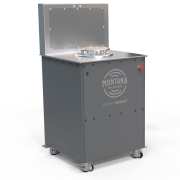
VROM 1500ST

Lab-to-pilot-scale mixer

Table Header Table Header
Nominal Max. Payload
5 kg
(11 lb)
Typical Working Range
2-7 kg
(4.4-14.4 lb)
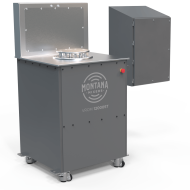
6000ST Hero Prelim
VROM 3-6000ST SERIES

Pilot-to-production-scale
mixer series

Table Header Table Header
Typical Working Range
5-20 kg
(11-44 lb)
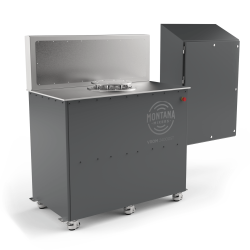
12000ST Hero 1-5-26 Sqr
VROM 12000ST

Production-scale mixer

Table Header Table Header
Nominal Max. Payload
40 kg
(88 lb)
Typical Working Range
20-40 kg
(44-88 lb)
24000ST
VROM 24000ST

Production-scale mixer

Table Header Table Header
Nominal Max. Payload
80 kg
(176 lb)
Typical Working Range
40-80 kg
(88-176 lb)

VROM XP Mixers

Remote operability

Stainless steel exterior panels

Enclosure pressure and purge systems

Explosion-proof or intrinsically safe components used throughout

XP models are engineered for mixing energetic or hazardous materials. These systems are highly configurable to meet strict safety standards. 

VROM 1500XP

Lab-to-pilot-scale
energetics mixer

Table Header Table Header
Nominal Max. Payload
5 kg
(11 lb)
Typical Working Range
2-7 kg
(4.4-14.4 lb)
VROM 3-6000XP SERIES

Pilot-to-production-scale energetics mixer series

Table Header Table Header
Typical Working Range
5-20 kg
(11-44 lb)
12000xp single no bg
VROM 12000XP

Production-scale energetics mixer

Table Header Table Header
Nominal Max. Payload
40 kg
(88 lb)
Typical Working Range
20-40 kg
(44-88 lb)
24000xp no bg
VROM 24000XP

Production-scale energetics mixer

Table Header Table Header
Nominal Max. Payload
80 kg
(176 lb)
Typical Working Range
40-80 kg
(88-176 lb)

Understanding Resonant Mixer Capacity

How much can you process with a given mixer? Well, it depends. 

The payload capacity of any resonant mixer is best understood as a working range, not a fixed maximum. Actual maximum capacity depends on the machine’s available mixing power, vessel configuration, target energy to the mix, process time, and how the material behaves under resonant motion.

  • Material Behavior
    Density, flowability, particle shape, cohesion, and heat sensitivity can all affect working payload. Dense, free-flowing materials may support higher payloads, while light, cohesive, or heat-sensitive materials may require smaller batches. As an example, we have mixed up to 7 kg of metal powder at full acceleration on a VROM 1500. The same system is at capacity with 2-3 kg of light, cohesive powder. 
  • Vessel Configuration
    Vessel size, geometry, fill level, fixturing, and optional process connections can affect how material moves inside the vessel and how much payload the mixer can support. For example, heavier vessels, such as “jacketed” vessels for temperature control, may limit the mixer’s maximum payload. 
  • Process Requirements
    Mix time, vacuum, temperature control, and production goals can all influence the recommended mixer size and working payload range. We may recommend a more powerful mixer for extended mixing cycles or continuous use in production environments, as an example. 

Choosing the Right Mixer for Your Application

Montana Mixers is committed to your success with VROM. Our mixing experts will work with you to ensure you don’t end up with less power than you need or overpay for excess capacity. Our published working payload ranges are intended as a starting point to guide model-selection, but once we understand your materials, target batch size, and process goals, we may recommend a larger or smaller machine.

Mixing Knowledge is Mixing Power

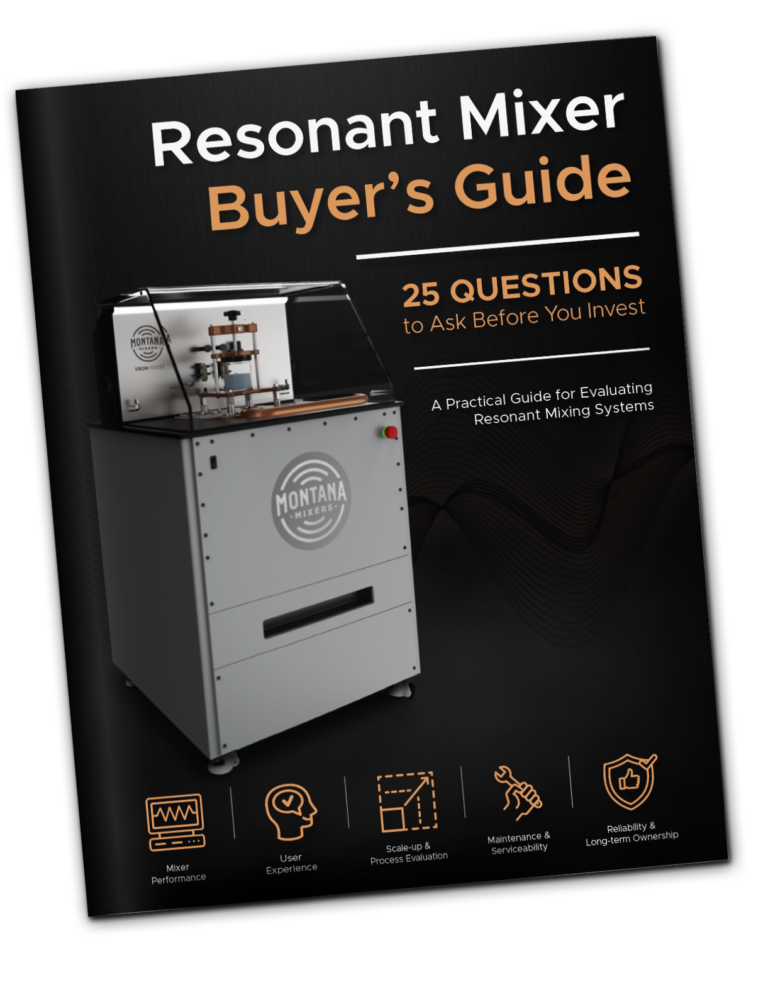
Our Resonant Mixer Buyer’s Guide is a useful resource whether you’re just beginning your exploration of resonant mixing technology or you’re a resonant mixing veteran looking into vendor and model options as you scale.

Complete the short form below to get your copy.